





Quick Overview
Essential highlights of Indian Agricultural Research Institute

Established in
1905

Courses
-

Type
Other

Campus Size
12 acres
Reviews
4.8

NAAC Grade
A+

Courses, Admission 2026, Cutoff, Ranking, Placement, Reviews

Essential highlights of Indian Agricultural Research Institute
The Indian Agricultural Research Institute, also known as IARI, is famous as a country's leading agricultural research, teaching, and extension organisation. It was founded in Pusa, Bihar, in 1905 and moved to Delhi in 1936. With the creation of high-yielding crop varieties and creative farming techniques, IARI known for being a pioneer of the Green Revolution and has significantly contributed to the transformation of Indian agriculture. Undergraduate (BSc Agriculture), graduate (MSc, MTech), and doctoral (PhD) courses are among the academic offerings of this recognised institution, which has been in existence since 1958. According to the NIRF, the institute routinely holds the top spot among agricultural institutions.
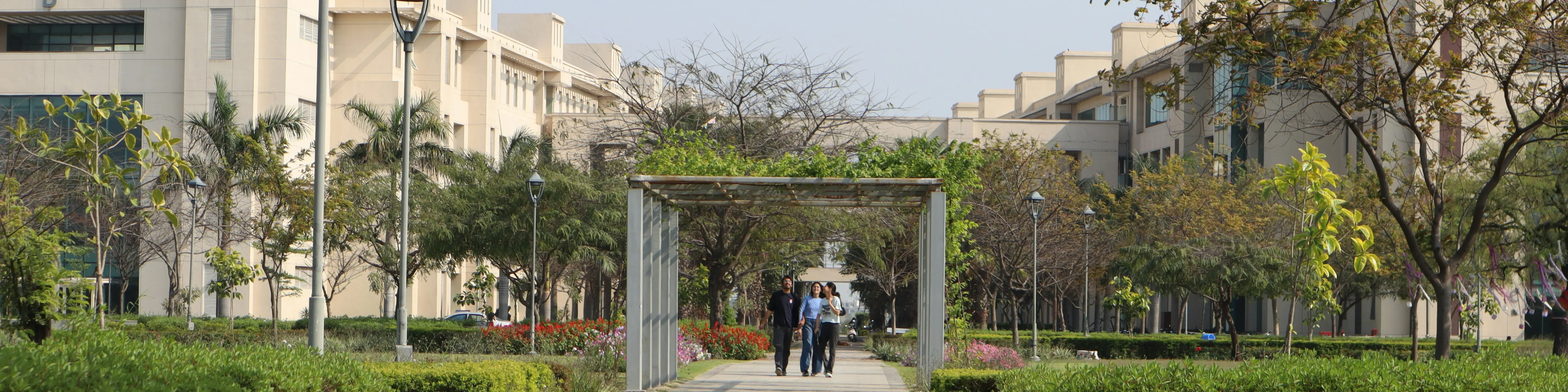
Modern research labs, cutting-edge laboratory equipment, a comprehensive library, and seed production and distribution facilities like the Pusa Beej Portal are all part of its expansive 500-hectare campus in New Delhi. IARI's leadership in agricultural sciences is demonstrated by the many honours its teachers and graduates have received, including the Padma Shri, Borlaug Award, and Om Prakash Bhasin Award. In order to promote an atmosphere of academic quality and creativity devoted to sustainable agriculture and food security in India, the institute also offers a variety of fellowships and scholarships.
| Attribute | Details |
|---|---|
| College Name | Indian Agricultural Research Institute (IARI) |
| Year of Establishment | 1905 (originally at Pusa, Bihar; relocated to Delhi in 1936) |
| Type of College | Public Research Institute, Deemed University (since 1958 under UGC Act) |
| Accreditation | Approved by the Indian Council of Agricultural Research (ICAR) and University Grants Commission (UGC); NAAC Grade A |
| Recognition | Recognized as a national institute for agricultural research, education, and extension; ranked 1st among Agriculture and Allied Universities in NIRF 2024 |
| Affiliated | Affiliated with the Indian Council of Agricultural Research (ICAR) |
| Famous Provided Courses | BSc (Hons) Agriculture, BTech Agricultural Engineering, MSc in various disciplines (Agronomy, Horticulture, Genetics, etc.), MTech Agricultural Engineering, PhD in multiple specializations, MBA Agribusiness, MCA, PG Diploma in Agricultural Extension |
| Accepted Entrance Exam | ICAR AIEEA (UG & PG), GATE, JRF, SRF, NET, CAT/MAT/XAT (for MBA), IARI's own entrance exams for MCA and PG Diploma |
| Top Recruiters | Bayer CropScience, Syngenta, Dupont Pioneer, IFFCO, ICAR, State Agricultural Universities, Tata Rallis, Mahyco Seeds, ITC, Mahindra Agro, Nestle, Monsanto, CIMMYT, IRRI |
| Official Website | https://www.iari.res.in |
The Indian Agricultural Research Institute (IARI) provides agricultural and related science courses at the undergraduate, graduate, doctorate, and diploma levels. Numerous specialities are covered in these courses, including genetics, plant pathology, agronomy, agricultural engineering, biotechnology, and agricultural extension. One-year diplomas, four-year undergraduate degrees, and doctoral studies are among the program lengths. Typical eligibility requirements include acceptable academic credentials, such as a bachelor's or master's degree for postgraduate and Ph.D. programs and a 10+2 for undergraduate admissions. National-level entrance tests like the ICAR AIEEA are the major method of admission, and the institute maintains a fair pricing schedule in line with government regulations. Check below mention courses and other details
| Course Name | Specialization | Duration | Eligibility |
|---|---|---|---|
| B.Sc. (Agriculture) | General Agriculture | 4 years | 10+2 with Physics, Chemistry, Biology |
| B.Sc. (Community Science) | Home Science, Nutrition, Extension | 4 years | 10+2 with Physics, Chemistry, Biology |
| B.Tech (Agricultural Engineering) | Farm Machinery, Irrigation, Structures | 4 years | 10+2 with Physics, Chemistry, Mathematics |
| B.Tech (Biotechnology) | Genetic Engineering, Bioprocessing | 4 years | 10+2 with Physics, Chemistry, Biology |
| M.Sc. (Agriculture) | Agronomy, Plant Pathology, Soil Science, etc. | 2 years | B.Sc. Agriculture or equivalent |
| M.Sc. (Microbiology) | Microbial Biotechnology, Environmental Microbiology | 2 years | B.Sc. in Microbiology or related field |
| M.Sc. (Molecular Biology & Biotechnology) | Genetic Engineering, Bioprocessing | 2 years | B.Sc. in Biotechnology or related field |
| M.Sc. (Genetics & Plant Breeding) | Crop Genetics, Molecular Breeding | 2 years | B.Sc. in Genetics or related field |
| M.Tech (Agricultural Engineering) | Farm Machinery, Irrigation, Structures | 2 years | B.Tech in Agricultural Engineering |
| M.Tech (Post Harvest Technology) | Food Processing, Storage Management | 2 years | B.Tech in Food Technology or related field |
| Ph.D. (Agriculture) | Entomology, Agronomy, Microbiology, etc. | 4 years | M.Sc. in relevant field |
National entrance tests administered by ICAR and NTA are the main method of admission to the Indian Agricultural Research Institute (IARI). While admission to postgraduate (M.Sc., M.Tech.) and doctoral (Ph.D.) programs spanning 28 specialisations are determined by ICAR AIEEA (PG and Ph.D.) entrance exams, undergraduate courses such as B.Sc. (Agriculture) and B.Tech. are offered through CUET-UG. For undergraduate studies, eligibility usually entails a 10+2 in science; for postgraduate programs, a relevant bachelor's degree with at least 60% of the possible points; and for Ph.D. admissions, a master's degree in a related discipline. Interviews for advanced degrees may also be a part of the selection process.
IARI covers about 500 hectares in New Delhi and is equipped with a comprehensive infrastructure that fosters innovative research, experiential learning, and a lively student body. It has state-of-the-art labs, a top-notch library, cosy living quarters, sports and leisure facilities, and dedicated centres for cutting-edge research and environmental sustainability. IARI provided facility are
Ans. IARI offers undergraduate, postgraduate (M.Sc., M.Tech.), and doctoral (Ph.D.) programs across a wide range of agriculture-related disciplines.
Ans. For IARI undergraduate courses, candidates must have completed 10+2 (Science stream) with required minimum marks, and succeed in national-level entrance exams like CUET-UG or ICAR-based tests.
Ans. Admission to IARI’s M.Sc./M.Tech. programs is granted based on performance in the ICAR NTA/CUET entrance examination, followed by merit-based selection.
Ans. Applicants seeking a Ph.D. at IARI must clear the ICAR/NTA-based entrance exam, followed by consideration of academic scores and interview performance.
Ans. IARI offers 28 distinct specializations for both M.Sc./M.Tech. and Ph.D. courses, including Agronomy, Biochemistry, Genetics & Plant Breeding, Microbiology, Post-Harvest Management, and many more.
Ans. Candidates must apply online via the official IARI/NTA portal submitting documents, choosing programs, and paying fees to complete the application process.
Ans. Yes, IARI offers various fellowships and merit-based scholarships especially for M.Sc., M.Tech., and Ph.D. students based on performance and financial need
Tell us in one tap. It helps us improve.
Loading authentic student experiences...